
You wake up with a stuffy nose inside your own bedroom. The dust settles on every flat surface hours after you wipe it down. That lingering cooking smell refuses to leave the living room, and your lungs feel heavy even when the windows are closed. This is the daily reality when airborne particulates, pet dander, smoke, and volatile organic compounds accumulate faster than your home’s natural ventilation can handle. A dedicated air filtration machine is the single most effective solution — but choosing the wrong one wastes space, generates noise, and fails to capture the microscopic allergens that trigger your symptoms.
I’m Mo Mahin — the founder and writer behind Furric. I’ve spent the past two years dissecting indoor air quality data, comparing CADR ratings across brands, studying third-party lab certifications like AHAM Verifide and CARB compliance, and aggregating feedback from thousands of verified owners to pinpoint exactly which units deliver measurable air quality improvements without becoming an obtrusive appliance in your daily life.
This guide walks you through the essential specs and real-world performance metrics that separate effective purification from marketing claims so you can confidently choose the best room hepa filter for your specific space and sensitivity level.
How To Choose The Best Room HEPA Filter
Selecting the right unit means matching the filtration capacity to your room volume, your sensitivity to allergens, and your tolerance for ongoing filter purchases. These three parameters define the decision.
Square Footage vs. ACH (Air Changes per Hour)
A filter’s advertised room size is often based on a single air change per hour, which is insufficient for allergy sufferers. Look for units that deliver 4.8 air changes per hour (ACH) at their rated CADR. A unit covering 200 sq ft at 4.8 ACH cleans the air roughly every 12.5 minutes, whereas the same unit covering 1,000 sq ft at 1 ACH takes a full hour for one cycle. Always compare CADR values (smoke, dust, pollen) rather than trusting the max square footage on the box.
Noise Floor and Sleep Mode Viability
Decibel ratings below 30 dB are considered whisper-quiet and suitable for continuous bedroom operation. Units that dip to 24 dB or lower use advanced fan insulation or motor dampening. Anything above 50 dB on the lowest setting becomes audible white noise that may disturb light sleepers. Some units automatically engage sleep mode when the room goes dark — this feature eliminates manual speed switching at bedtime.
Filter Replacement Economics
The upfront cost is only half the equation. A budget unit with a price tag may require worth of filters every six months, effectively doubling the annual cost of ownership. Premium units with washable pre-filters or permanent HEPA media reduce recurring expenses but carry a higher initial investment. Calculate the total cost over 24 months before committing to a specific ecosystem.
Quick Comparison
On smaller screens, swipe sideways to see the full table.
| Model | Category | Best For | Key Spec | Amazon |
|---|---|---|---|---|
| LEVOIT Core 300-P | Mid-Range | All-purpose bedroom use | 143 CFM CADR (Smoke) | Amazon |
| Winix 5510 | Mid-Range | Large rooms with pets | 392 sq ft AHAM Verifide | Amazon |
| Coway AP-1512HH | Premium | Smart sensor accuracy | 24.4 dB noise floor | Amazon |
| Honeywell HPA304 | Premium | Extra-large rooms | 465 sq ft 4.8 ACH | Amazon |
| PuroAir 240 | Mid-Range | Allergy symptom relief | 1000 sq ft coverage | Amazon |
| LEVOIT Core 200S-P | Mid-Range | Compact spaces & dorms | 27 dB Sleep Mode | Amazon |
| GermGuardian AC4825E | Mid-Range | UV-C germ reduction | 153 sq ft 12.5 min | Amazon |
| Coway Airmega 250 | Premium | Whole apartment coverage | 1860 sq ft per hour | Amazon |
| Nuwave Forever | Premium | Zero filter replacement | 2002 sq ft coverage | Amazon |
In‑Depth Reviews
1. LEVOIT Core 300-P

The LEVOIT Core 300-P strikes the hardest balance between CADR throughput and operating silence. With a CADR of 143 CFM for smoke, 153 for dust, and 167 for pollen, it refreshes a standard 222 sq ft bedroom 4.8 times per hour. The 56W high-torque motor pushes air efficiently through the 3-in-1 HEPA filter without generating the hum typical of similarly powered units. Verified owners mention that the low and medium speeds are nearly inaudible, making it viable for continuous overnight use.
Sleep Mode drops the noise to 24 dB, which sits below the ambient sound level of most quiet bedrooms. The built-in timer (2 to 8 hours) and display-off button prevent light pollution. The unit is compact at 8.7 inches square and weighs under 8 pounds, allowing easy relocation between rooms. The AHAM Verifide seal removes guesswork — these CADR numbers are independently verified, not manufacturer-estimated.
The filter choice ecosystem adds value: you can swap between an Original filter, a Toxin Absorber for VOCs, a Smoke Remover for wildfire particulates, or a Pet Allergy filter. Replacement intervals run roughly 6–8 months depending on usage. The upfront cost sits firmly in the mid-range, but the filter options let you customize the unit to seasonal changes without buying a second machine.
Why we love it
- Industry-best 24 dB Sleep Mode for undisturbed rest.
- AHAM Verifide CADR ratings remove marketing inflation.
- Multiple specialized filter types adapt to seasonal allergen shifts.
Good to know
- Replacement filters are proprietary and cost – per change.
- High speed is audible at roughly 50 dB — not ideal for ultra-sensitive sleepers on max.
2. Winix 5510

The Winix 5510 is the new-generation iteration of the well-regarded 5500-2 platform with added app support. It carries an AHAM Verifide rating at 392 sq ft, meaning it scrubs a medium-large living area to standard within the ACH benchmark. The four-stage filtration (washable fine mesh pre-filter, carbon filter, True HEPA, and Plasmawave ion technology) captures 99.99% of particles as small as 0.01 microns. The pre-filter and carbon filter are washable, reducing consumable costs over time.
Auto Mode uses a built-in particle sensor to adjust fan speed in real time. Owners report the sensor reliably detects cooking smoke, dust events, and even ambient odors from across the room. The unit automatically switches to Sleep Mode when the room darkens — a genuinely hands-free experience. At 23.5 dB on the lowest speed, it competes directly with the quietest units in the segment. The companion app enables remote monitoring and scheduling.
Annual filter costs are lower than average because the pre-filter and carbon layer are washable; only the True HEPA cartridge needs replacement (roughly every 12 months). The magnetic front panel makes filter access tool-free. At 13.3 pounds, it is heavier than the LEVOIT but still portable. The polished charcoal gray finish and tower form factor fit contemporary interiors without looking like medical equipment.
Why we love it
- 23.5 dB low-speed noise is practically silent.
- Washable pre-filter and carbon layer cut yearly filter costs significantly.
- Smart app, Alexa, and Google Assistant integration for remote control.
Good to know
- Plasmawave ion feature can be turned off but adds a subtle ozone concern for ultra-sensitive users.
- Vertical side air intakes require clearance on both sides for optimal CFM.
3. Coway AP-1512HH (Mighty)
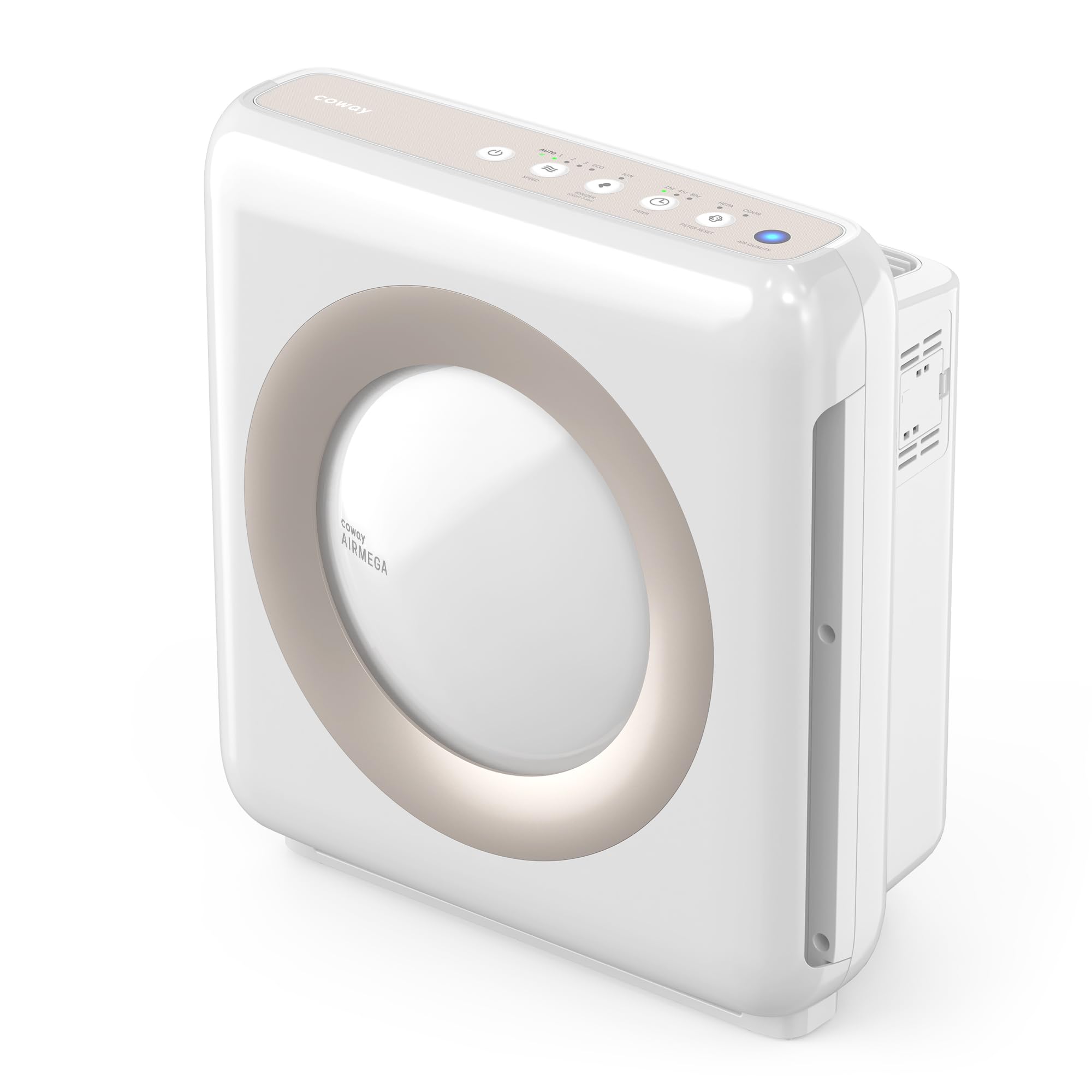
The Coway Airmega AP-1512HH has held a Wirecutter top pick position since 2018 for good reason. Its four-stage filtration (washable pre-filter, deodorization carbon filter, True HEPA, and Vital Ion) delivers a dust CADR of 246 CFM and a pollen CADR of 240 CFM — numbers that outperform many larger units. The real-time air quality display shows PM 1.0, PM 2.5, and PM 10.0 levels, giving you granular feedback rather than a simple color code.
Auto Mode optimizes fan speed between three levels based on the pollution sensor data. When the sensor detects clean air for 30 consecutive minutes, the unit enters Eco Mode and stops the fan entirely, conserving energy. The noise floor at the lowest setting is just 24.4 dB. At maximum speed, 53.8 dB is noticeable but typical for a high-CADR machine. The 77W power consumption on max is reasonable for the cleaning output.
The 12.5-pound weight and 16.8 x 18.3 x 9.7 inch footprint make it a desk-side or corner unit rather than a compact portable. The upward airflow design prevents dust accumulation on nearby surfaces. Filter replacement indicators track both the pre-filter and HEPA separately. The limited warranty covers motor and electronic parts for three years, which is above average for this price tier.
Why we love it
- Live PM numerical display provides concrete air quality data, not just a colored LED.
- Eco Mode stops the fan during clean periods, reducing power draw and noise.
- Upward airflow design minimizes dust settling on furniture near the unit.
Good to know
- Auto Mode uses only three fan speeds — lacks a medium-default setting for consistent circulation.
- Filter replacement cost is moderate; the deodorization filter needs changing every 6 months.
4. Honeywell AllergenPlus HPA304
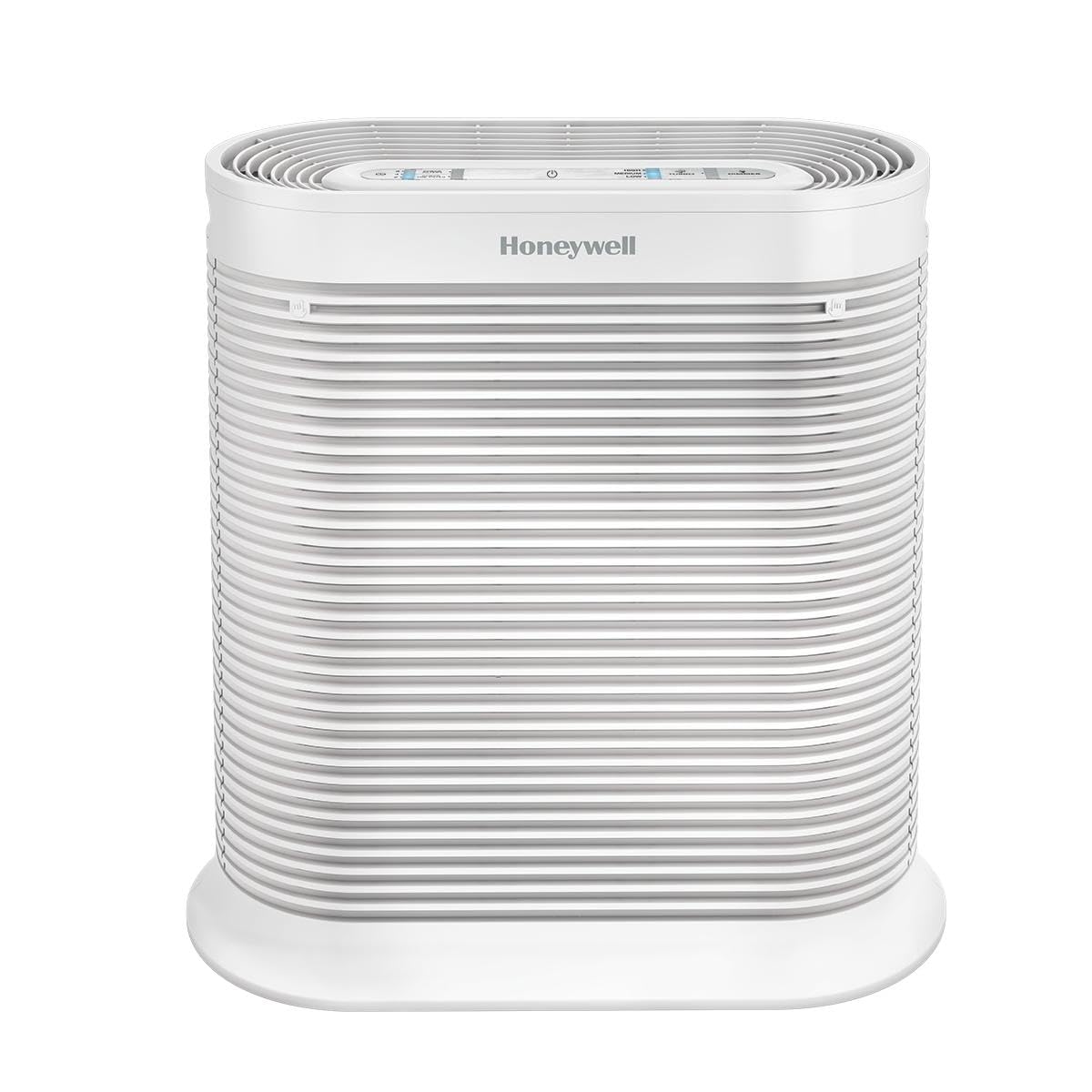
The Honeywell HPA304 is engineered for extra-large rooms, covering 465 sq ft at 4.8 air changes per hour — meaning the entire volume is filtered every 12.5 minutes. The AllergenPlus series uses a True HEPA filter that captures 99.97% of particles as small as 0.3 microns. The unit includes a pre-washable A+ filter that catches larger debris and extends the HEPA lifespan. Three cleaning levels plus a Turbo Clean mode provide flexibility across different air quality conditions.
Owners consistently report that the unit remains durable for 7 to 10 years with regular filter changes, making it one of the longest-lasting options in this comparison. The noise level on the lowest setting is suitable for bedroom use, though the Turbo mode produces a noticeable fan roar. The design places intake on the front and exhaust upward, allowing placement close to walls without sacrificing air intake efficiency. The blue indicator light can be turned off for light-sensitive sleepers.
Filter replacement involves three separate HEPA cartridges, which increases the cost compared to single-cartridge units. The pre-filter is washable and should be cleaned every three months. The HEPA cartridges typically last 12 months. At 17 pounds, this is a heavy unit designed to stay in one location. Energy Star certification confirms low standby power consumption.
Why we love it
- Proven 7–10 year lifespan with consistent filter maintenance.
- 4.8 ACH on a 465 sq ft room — one of the highest real-world coverage rates.
- Washable A+ pre-filter reduces HEPA consumable frequency.
Good to know
- Three separate HEPA filters cost more to replace than single-cartridge designs.
- Turbo mode is loud — not suitable for near-silent operation at max speed.
5. PuroAir 240
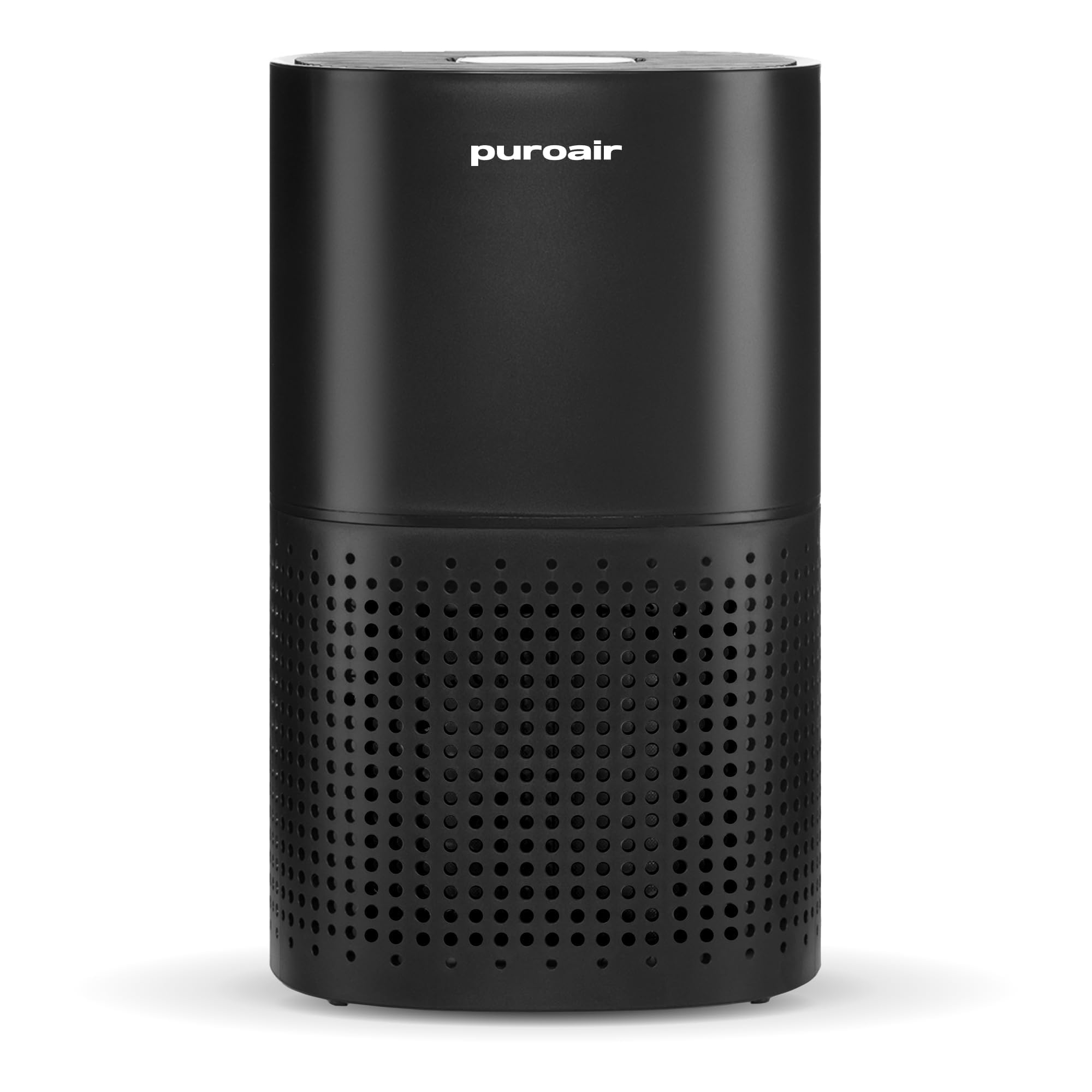
The PuroAir 240 delivers mid-range pricing with coverage specs that approach premium territory. It cleans rooms up to 1,000 sq ft in one hour based on independent ISO 17025 certified lab testing. The three-layer filtration system (pre-filter, HEPA, activated carbon) captures 99.9% of pollutants, including particles 700 times smaller than a human hair. A built-in particle sensor monitors air quality and automatically adjusts fan speed when pollution spikes.
The unit measures 10.63 x 10.63 x 28 inches with a slim tower profile. Sleep Mode engages quietly, and owners describe the low speed as almost silent. The auto mode responds quickly to cooking fumes, pet activity, and dust events — verified owners report noticeable improvements in allergy symptoms within three weeks of continuous use. The filter life indicator on the companion app eliminates guesswork about replacement timing.
Where the PuroAir 240 partially compromises is in the filter replacement cost. The proprietary cartridge is somewhat pricier than generic options, and aftermarket alternatives may degrade performance or shorten lifespan. The 2-year risk-free warranty backs the unit, but filter economics should be factored into the total ownership calculation. The CARB, ETL, and UL certifications confirm safety compliance for continuous 24/7 operation.
Why we love it
- 1,000 sq ft coverage per hour at a mid-range price point.
- Smart particle sensor with auto fan adjustment for hands-free operation.
- Compact tower design with a slim 10.6-inch width.
Good to know
- Proprietary replacement filters are relatively expensive and needed every 6–8 months.
- Aftermarket filters may void performance guarantees and reduce particle capture efficiency.
6. LEVOIT Core 200S-P

The Core 200S-P is the smart-enabled sibling in LEVOIT’s compact lineup. It integrates with Alexa and Google Assistant for voice control, making it convenient for bedroom or dorm-room use where physical interaction is minimal. The 360° air intake design pulls air from all directions, maximizing efficiency in a 140 sq ft room at 4.8 air changes per hour. The 3-in-1 filter captures 99.97% of particles between 0.1 and 0.3 microns.
Noise output drops to 27 dB on Sleep Mode, which is slightly higher than the Core 300-P’s 24 dB but still well within the whisper-quiet range. Owners consistently applaud the small footprint (8.07 inches square) and lightweight 6.6-pound construction. The Display Off button eliminates all indicator light pollution, and the unit runs 24/7 without overheating. The AHAM Verifide seal confirms the CADR numbers are independently validated.
Where it differentiates from the Core 300-P is the inclusion of Wi-Fi and voice assistant support, which adds convenience for users who want to monitor filter life and adjust settings remotely. The trade-off is a slightly lower CADR than the 300 series — the 200S-P is best suited for smaller bedrooms, offices, or dorm rooms rather than open-plan living areas. Filter replacement follows the same LEVOIT ecosystem, with filters costing roughly – each.
Why we love it
- Alexa and Google Assistant integration for hands-free control.
- Extremely compact 6.6-pound build easily moves between rooms.
- AHAM Verifide with independently tested CADR for confidence.
Good to know
- Coverage is limited to 140 sq ft at 4.8 ACH — not suitable for large spaces.
- Sleep Mode at 27 dB is slightly louder than the Core 300-P’s 24 dB floor.
7. GermGuardian AC4825E

The GermGuardian AC4825E brings a unique fourth layer to its filtration — an optional UV-C light that targets airborne bacteria, germs, and mold spores. The True HEPA filter captures 99.97% of particles down to 0.1 microns, while the activated carbon layer tackles odors. The UV-C bulb is independently certified as Zero Ozone, meaning it won’t produce harmful ozone during operation. This makes it a strong candidate for households concerned about biological contaminants beyond standard dust and pollen.
The unit covers a 153 sq ft room in 12.5 minutes (4.8 ACH) and can cycle a 743 sq ft space once per hour. The three-speed rotary dial is simple and tactile — no app, no touchscreen — which some owners prefer for reliability. The lowest setting produces gentle white noise, while medium speed is barely audible. The UV-C light has a separate on/off switch so you can choose to run it only during peak flu season or when allergens spike.
Owners praise the build longevity, with many reporting multiple years of daily use. The washable pre-filter reduces the load on the main HEPA and carbon combination. Filter replacements are widely available and reasonably priced, with the HEPA pack (FLT4825 series) lasting 6–12 months depending on usage. The 22-inch tower profile fits unobtrusively against walls or in corners.
Why we love it
- Optional UV-C light reduces biological contaminants without generating ozone.
- Simple rotary controls eliminate app complexity for non-tech users.
- Widely available, reasonably priced replacement filters keep long-term costs manageable.
Good to know
- High speed is noticeably loud — not ideal for bedside use on maximum.
- No smart features or particle sensor; requires manual speed adjustment.
8. Coway Airmega 250

The Coway Airmega 250 is designed for whole-home or open-plan spaces up to 1,860 sq ft per hour. Its HyperCaptive Filtration System combines a washable pre-filter, activated carbon filter, and True HEPA filter that captures 99.97% of 0.3-micron particles. The air quality indicator runs 24/7, providing real-time feedback and automatically adjusting purification levels. Rapid Mode pushes the fan to maximum power when pollution spikes, then drops back to Eco Mode when the air clears.
Smart Mode adapts fan speed based on the sensor data, and the unit is notably quiet on low settings. Owners frequently mention that the low speed is barely perceptible, and the auto mode responds quickly to cooking smoke, pet dander events, and even external wildfire pollution. The dual-fan design moves a high volume of air without the noise level of comparable industrial units. The pre-filter is washable, and the main HEPA filter replacement costs roughly per year — one of the lowest ongoing costs for a premium-sized unit.
The form factor is a low-profile rectangular tower (8.3 x 18.5 x 19.7 inches) weighing 20.5 pounds. It lacks Wi-Fi connectivity, which some users view positively as one less point of failure. The 3-year warranty is solid for this tier. Filter replacement alerts track both the pre-filter and HEPA separately, and the carbon filter life indicator provides clear timing for changes. The warm gray finish blends into most interiors.
Why we love it
- 1,860 sq ft per hour coverage rivals units costing significantly more.
- Annual HEPA filter cost under — exceptional value for a premium machine.
- Smart and Rapid Modes automate speed adjustment based on real-time air quality.
Good to know
- No Wi-Fi or app — you cannot monitor air quality remotely.
- At 20.5 pounds, it is less portable than smaller competition.
9. Nuwave Forever

The Nuwave Forever redefines the ownership model by eliminating disposable filter replacements entirely. The patented 7-stage system uses washable stainless-steel pre-filters, reusable Bio-Guard filters, and ozone removal filters that you clean rather than replace. Intertek lab certification confirms 100% capture of particles down to 0.1 microns, including smoke, dust, pollen, and pet hair. The unit also reduces ozone levels to 1 ppb, exceeding CARB compliance standards.
Coverage reaches 2,002 sq ft in one hour, making it the broadest single-unit option in this list. The adjustable flow panel rotates 30°, 60°, or 90° to direct clean air exactly where needed — a feature unique in this segment. Auto Mode uses dual particle and odor sensors to continuously monitor and adjust fan speeds across six levels. Wi-Fi capabilities allow remote control via the companion app.
The initial investment is the highest in this comparison, but the total cost of ownership over 24 months is competitive because you never buy replacement filter cartridges. Owners report washing the filters every 2–4 weeks depending on air quality, with a drying period of roughly 24 hours. The unit weighs 21.85 pounds and measures 13 x 14.25 x 22.81 inches. Fan speeds above level 3 produce noticeable noise, but lower levels are quiet enough for continuous bedroom operation.
Why we love it
- Zero replacement filter costs — washable media eliminates recurring expenses.
- Adjustable flow panel directs clean air to specific zones.
- 2,002 sq ft per hour coverage handles whole-home purification.
Good to know
- Highest upfront price in the comparison requires larger initial investment.
- Filters require regular washing (every 2–4 weeks) and 24-hour drying time.
- Above fan speed 3 the noise becomes noticeable — not silent at max.
FAQ
What CADR rating is ideal for a 300 sq ft bedroom?
Can a HEPA filter remove smoke and VOCs effectively?
How often should I run a room HEPA filter — 24/7 or only when home?
Final Thoughts: The Verdict
For most gardeners, the best room hepa filter winner is the LEVOIT Core 300-P because it delivers AHAM Verifide CADR ratings, a 24 dB sleep mode, and multiple specialized filter options in a compact portable package. If you want app control and washable pre-filters, grab the Winix 5510. And for the ultimate no-disposable-filter experience with the largest coverage area, nothing beats the Nuwave Forever.